Quick Answer
For most first-time luxury buyers, pre-owned is the smarter financial choice. You usually avoid the steepest early depreciation, you get access to more watch for the same budget, and in many cases you can buy a model that feels one tier better than what you could afford new.
But that does not mean pre-owned is always the right first purchase. If you are anxious about authenticity, you do not yet understand condition grading, or you want the simplest possible ownership experience, buying new can still be the better decision. Paying more is sometimes justified if it materially reduces stress and decision risk.
The cleanest rule is this: buy new when you are paying for certainty, and buy pre-owned when you are paying for value. The trick is knowing which one matters more to you on your first serious watch.
If you are also deciding which actual watch category to buy first, read Best First Luxury Watch Under $2,000 in 2026 after this.
Why Pre-Owned Usually Wins on Value
Most luxury watches are not scarce, and most do not hold retail value the second you leave the store. That is why the pre-owned market is so important. It lets buyers step around the biggest early-value loss and focus on the watch itself instead of the retail markup.
This matters even more for first-time buyers. In your first purchase, you are still learning what size feels right, what dial style you actually wear, and whether you prefer sporty or dressier watches. If you buy pre-owned intelligently, you reduce the cost of being wrong.
That does not mean every pre-owned deal is good. It means the buyer has more leverage. If the model is widely available and not artificially supply-constrained, the secondary market often gives you the better negotiating position.
When Buying New Is the Smarter Move
Buying new makes the most sense when you care more about certainty than optimization.
New is usually the better first-buy route if:
- You want full manufacturer warranty and clean service history from day one.
- You are not yet comfortable judging wear, polishing, or parts originality.
- The model trades near or above retail anyway.
- The boutique or authorized dealer experience matters to you.
For some buyers, the emotional side is real too. Opening the box as the first owner, getting the bracelet sized for you, and having your name on the paperwork can matter. If that experience is a major part of the purchase, buying new is not irrational. It is just a different priority.
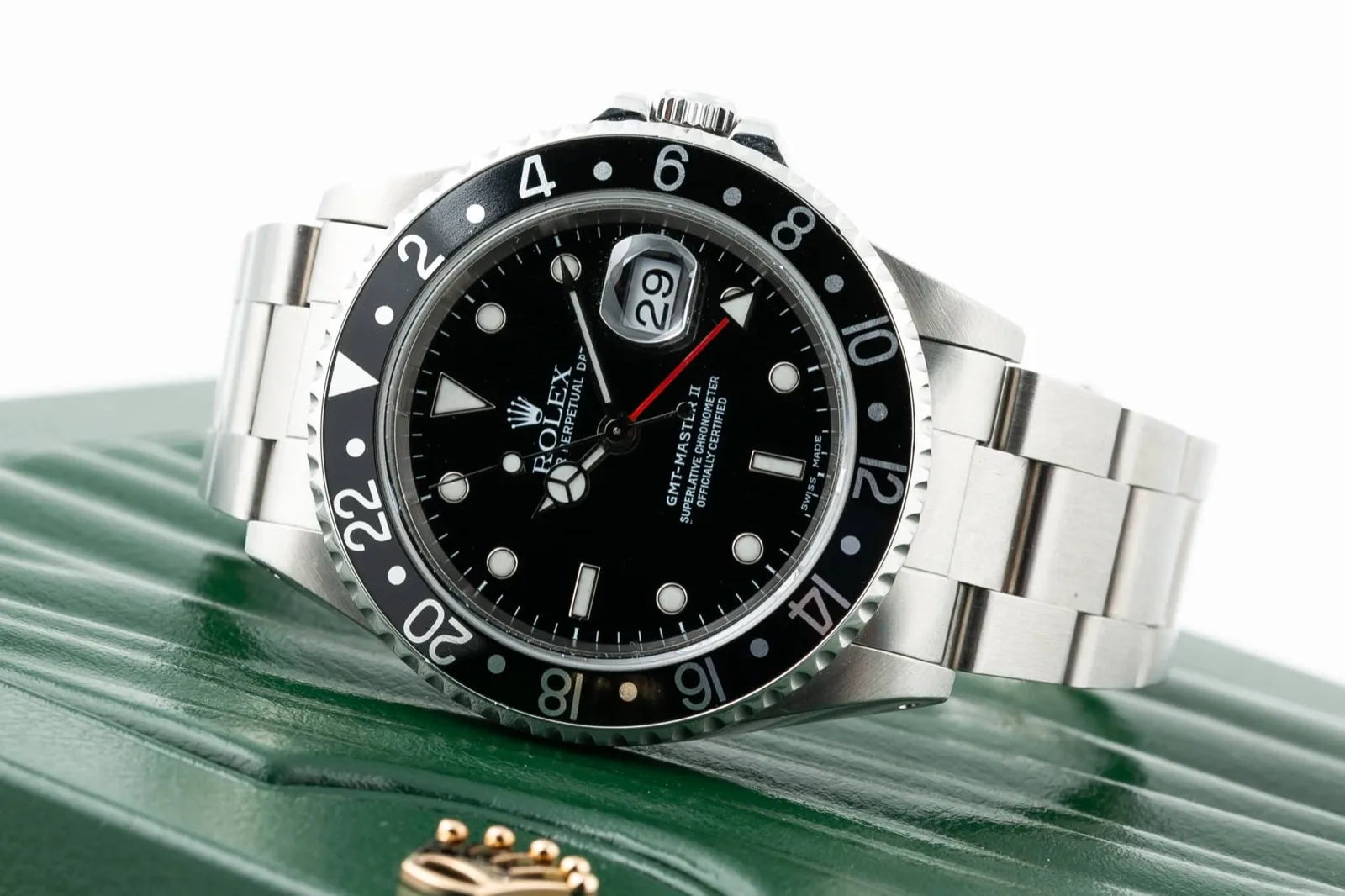
Rolex sports models are the classic example of where new vs pre-owned can get counterintuitive. If a watch trades at or above retail and retail access is limited, “buying pre-owned to save money” may not even exist as an option. In that case, the real question is availability, not value.
When Pre-Owned Is the Better First Buy
Pre-owned is strongest when the model is easy to source and depreciates normally after initial purchase. That is why brands like Omega and Tudor often make more sense second-hand than at retail for a first-time buyer.
If your budget is fixed, pre-owned also expands your options immediately. Instead of buying the cheapest new watch that fits the logo you want, you can often buy the better watch in the model range that someone else already took the depreciation hit on.
Pre-owned is also useful if you are still testing your taste. Your first luxury watch does not need to be your last. If you buy sensibly on the secondary market, you usually protect more of your exit value if you later trade or sell.
What the Real-World Examples Show
The examples in the comparison snapshot above show why there is no single answer across all brands.
The Rolex Submariner is unusual because pre-owned can trade close to retail or above it. That means pre-owned does not automatically equal savings. In this case, new is attractive if you can actually get the watch, while pre-owned is often the “pay for immediate access” option.
The Omega Speedmaster Moonwatch is the opposite kind of example. It is iconic, easy to understand, and generally available, but it often offers meaningful second-hand savings. That makes it a strong pre-owned candidate for a thoughtful first buyer who wants value without stepping into obscure references.
The Tudor Black Bay 58 shows perhaps the clearest value logic. It is a strong modern watch, but the difference between new and pre-owned can be large enough that buying second-hand simply gives you a better ownership equation unless warranty simplicity matters a lot to you.
The takeaway is straightforward: the smarter channel depends less on brand prestige and more on availability, depreciation, and risk tolerance.
The Hidden Costs Buyers Forget
Most buyers compare sticker prices and stop there. That is not enough.
Before choosing new or pre-owned, account for:
- Service timing
- Bracelet stretch or wear
- Potential need for polishing or parts replacement
- Shipping, insurance, and taxes
- Return terms
- Resale liquidity if you change your mind
Pre-owned can still be the better deal after all of that, but only if the watch is actually priced with those realities in mind.
If you want a full maintenance overview by brand, continue with Watch Service Cost Guide (2026). If you are worried about counterfeits, read How to Spot a Fake Luxury Watch before buying anywhere second-hand.
A First-Buy Decision Framework
Use this framework before you commit:
1) Decide whether simplicity or value matters more
- If simplicity wins, buy new.
- If value wins, start with pre-owned.
2) Check whether the model actually depreciates
- If it depreciates normally, pre-owned usually wins.
- If it trades at or above retail, new may be better if available.
3) Be honest about your knowledge level
- If you cannot assess condition confidently, new reduces risk.
- If you can evaluate listings and sellers, pre-owned opens better value.
4) Think about your exit
Your first watch is often a learning purchase. If there is a good chance you will sell or trade within one to two years, pre-owned usually gives you a softer landing.
Final Recommendation
For most first-time buyers in 2026:
- Best financial choice: pre-owned
- Lowest-stress choice: new
- Best middle ground: buy a common, well-understood model pre-owned from a reputable platform or seller
If you are calm, detail-oriented, and willing to compare listings, pre-owned is usually the smarter route. If you want the cleanest possible experience and do not mind paying for it, buy new and remove the uncertainty.
That is the real answer: not “always pre-owned” or “always new,” but matching the purchase channel to your experience level, budget discipline, and tolerance for friction.