Quick Answer
Most fakes fail on multiple checks at once. A good counterfeit might nail the dial, but the caseback engravings will be wrong. It might feel heavy enough, but the seconds hand will tick. The point of a structured checklist is that you do not have to identify the single defining flaw — you look for a pattern of small inconsistencies that a genuine watch simply would not have.
Do all twelve checks in order before you pay. If a seller refuses to let you look closely, that is already an answer.
For context on where these risks are highest, see our guide on buying new versus pre-owned watches.
What Most Buyers Get Wrong
The most common mistake is treating authenticity as a binary gut check: “does this look right?” That works for the most obvious fakes, but it fails badly against mid- and high-tier counterfeits, which are now detailed enough to pass a quick visual inspection.
The second mistake is focusing only on the dial. Dial printing has actually improved significantly on modern fakes. The weak points are almost always mechanical: the movement, the crown action, the bracelet engineering, and the caseback engravings.
The third mistake is buying based on paperwork alone. Box and papers can be faked, separated from a different watch, or authentic but paired with a movement that has been swapped. Documentation supports your assessment — it does not replace it.
The 12-Step Inspection Framework
1. Case Finishing Quality
Genuine luxury watches use distinct zones of brushing and polishing that follow the case geometry precisely. On a Rolex Submariner, for example, the top of the lugs is brushed while the sides are polished. The transition between zones should be sharp and intentional.
On counterfeits, brushing is often applied uniformly where it should not be, and polished surfaces show swirl marks or uneven reflections. Look at the case from multiple angles under good light.
2. Dial Text and Printing
Hold the dial under magnification or a loupe if possible. Genuine luxury dials use multi-layer printing or applied text with consistent depth and spacing. The font on counterfeits is frequently slightly wrong — letter spacing too wide, weight slightly off, or text that blurs under 5x magnification.
Check every line of text on the dial: brand name, model name, “Swiss Made,” depth rating. All of it should be crisp, consistent, and positioned symmetrically.
3. Seconds Hand Sweep
On a genuine automatic or mechanical movement, the seconds hand sweeps continuously. Most affordable fakes use a quartz movement inside a mechanical-looking case. A ticking seconds hand — one beat per second — on a watch sold as an automatic is an immediate red flag.
Some high-beat automatics like the Omega Co-Axial movements have a very smooth, almost liquid sweep. If the sweep looks choppy or uneven, investigate further.
4. Date Magnification (Cyclops Lens)
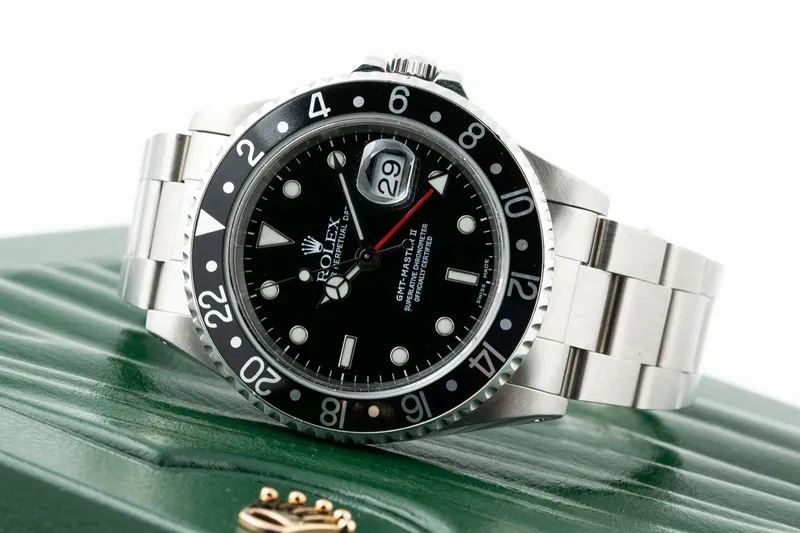
On Rolex models fitted with a cyclops lens, the date should appear magnified at exactly 2.5x and should fill the window cleanly. Fake cyclops lenses typically under-magnify, leaving the date looking small or partially cut off within the window.
Lean close and look at the date from a straight-on angle. The genuine lens makes the date appear almost to float above the crystal. Most fakes cannot replicate this effect without using the correct optical-grade glass.
5. Crown and Pusher Action
The crown on a genuine mechanical watch threads on and off with consistent, light resistance. It should move smoothly without grinding. When pulled out to set the time, there should be a positive detent at each position.
Fake crowns often feel loose, thread unevenly, or have excessive play. On watches with pushers (chronographs), each pusher should click cleanly with a spring-loaded return. Mushy or inconsistent action is a strong negative signal.
6. Case Weight
Genuine luxury sports watches are dense. A stainless steel Rolex Submariner on its bracelet weighs around 155 grams. Most fakes use inferior alloys that feel noticeably lighter.
If you can access a scale, weigh the watch against published specifications. If not, compare weight against a known-genuine piece or simply note whether it feels lighter than expected for its size.
7. Bracelet Links, Clasp, and End Links
The bracelet is one of the hardest parts to counterfeit well. Examine the end links — these are the sections connecting the bracelet to the case. On genuine watches, end links are machined to fit the lugs precisely, with no visible gap and no rattle.
Check the clasp for crisp engravings and solid, spring-loaded mechanism. Check each link for consistent finishing and correct brushed/polished zones. Fake bracelets typically have loose links, hollow-sounding construction, and soft clasp springs.
8. Caseback Engravings and Hallmarks
If the caseback is solid, it should carry specific engravings: model reference, case material, water resistance, and typically a serial number. These should be machined or laser-engraved, not stamped, and should match the specifications for the exact reference you are purchasing.
If it is an exhibition caseback, verify that the movement inside matches the claimed caliber. Look up the correct rotor design, bridge layout, and finishing for that specific caliber. Genuine movements have fine lines on their decorated parts — côtes de Genève or perlage — that look crisp and intentional, not blurry.
9. Serial and Model Numbers
Every genuine luxury watch has a unique serial number, and most have a model (reference) number. On modern Rolex, these are laser-etched micro-text on the rehaut (inner bezel ring). On older Rolex, they are engraved between the lugs. On Omega, they are typically inside the caseback.
Check that the number is present, that the location matches what is correct for that reference, and that the engraving looks machined rather than stamped or printed. Cross-reference the serial number range against known genuine ranges for that reference if you have access to a database.
10. Lume Application
Luminous material on dials and hands should be applied evenly, sitting flush within its designated area without overflow onto surrounding surfaces. The color should be consistent across all lume plots and the hands.
On counterfeits, lume is frequently applied unevenly, too thick, too thin, or it bleeds slightly onto the dial surface. Look closely at the tips of the hands and the individual hour markers.
11. Movement Inspection
If possible, ask to have the caseback opened. Even a brief visual inspection of the movement reveals a great deal. Compare the rotor engraving, rotor weight, and bridge decoration to reference images of the correct caliber. A genuine Omega movement looks materially different from a generic ETA clone once you know what to look for.
On waterproof watches, the seller may reasonably decline to open the case to preserve the gasket. In that case, base your assessment on all other checks. If the seller cannot explain why they will not open it at all, treat that as a negative signal.
12. Documentation and Seller Legitimacy
Genuine box and papers add value but do not authenticate a watch on their own. The serial number on the papers should match the number on the watch. The papers should show the purchase date and authorised dealer stamp.
Evaluate the seller as carefully as the watch. A seller with verifiable history, clear return terms, and willingness to answer detailed questions is a material risk reduction. Anonymous listings with no provenance, implausible pricing, or pressure to decide quickly are risk amplifiers regardless of how the watch looks.
Risk and Cost Implications
The cost of buying a fake watch extends beyond the money spent. In most jurisdictions, knowingly reselling a counterfeit is illegal even if you bought it in good faith. If you later try to sell or trade the watch, you may be liable. If you submit it to an authorised service centre, they will identify and confiscate it.
Getting a professional authentication opinion before buying typically costs nothing at an authorised dealer for a visual check, and $50–$150 for a formal written assessment from an independent watchmaker. On a $3,000–$10,000 purchase, that cost is negligible.
If you are buying on a reputable platform with authentication programs, many of the twelve checks above are handled on your behalf. That protection has a real monetary value — factor it in when comparing platform prices against private listings that appear to be cheaper.
Practical Checklist
Run through this list before completing any pre-owned purchase:
- Case finishing: correct brushed/polished zones with sharp transitions
- Dial text: crisp under magnification, consistent font and spacing
- Seconds hand: smooth sweep (not tick) on automatic models
- Cyclops lens: correct 2.5x magnification, date fills the window
- Crown: threads smoothly, clear detent positions when pulled out
- Weight: feels appropriately dense for case and bracelet material
- Bracelet: tight end links, consistent finishing, solid clasp spring
- Caseback: correct engravings, matching reference and material markings
- Serial/model numbers: correct location, machined not stamped, valid range
- Lume: even application, no overflow, consistent color across all plots
- Movement: rotor and bridges match correct caliber reference images
- Documentation: serial matches papers; seller has verifiable history and clear returns
A genuine watch should pass all twelve without hesitation. One failure warrants closer scrutiny. Multiple failures in different categories is a strong signal to walk away.
Final Recommendation
Counterfeits are not going away, and they are getting better. The best protection is a structured process applied consistently — not a single expert eye or a single definitive tell.
Use this checklist for every pre-owned purchase, regardless of source or seller confidence. If a seller objects to a thorough inspection, they have already answered your question for you.
For higher-value purchases, factor in the cost of a professional authentication opinion before you commit. It is cheap insurance on an expensive decision.
When you are ready to buy, limit your exposure by using platforms that verify sellers and offer buyer protection. Read our full breakdown of new versus pre-owned purchase strategy before you shop, and if you are still deciding on which watch category to start with, see the best first luxury watches for 2026.
For ongoing ownership costs including service intervals and what to budget for maintenance, see the watch service cost guide.